
The chemical system comprising methyl formate (HCOOCH₃), methylene (CH₂), and water (H₂O) exemplifies a significant intersection between organic synthesis and sustainable chemical methodologies.
Thank you for reading this post, don't forget to subscribe!This combination involves three distinct molecular components that work together to create environmentally friendly chemical processes.
A thorough understanding of this system facilitates the advancement of environmentally benign manufacturing processes and the development of green synthetic routes.
The integration of these components demonstrates how traditional chemistry can evolve toward greener alternatives without compromising performance or economic viability.
| Article Profile Summary | |
| Topic | HCOOCH CH2 H2O Chemical System |
| Main Components | Methyl formate, Methylene group, Water |
| Primary Focus | Green chemistry applications |
| Word Count | 1,100 words |
| Target Audience | Chemistry students, researchers, industry professionals |
| Key Applications | Pharmaceuticals, foam production, sustainable synthesis |
Understanding the Components of HCOOCH CH2 H2O
The HCOOCH CH2 H2O system comprises three fundamental chemical units, each contributing unique properties to overall reactivity. Methyl formate functions as the principal ester, synthesized via the acid-catalyzed esterification of formic acid and methanol.
The methylene group (CH₂) provides essential reactivity sites for organic transformations. This versatile unit enables chain extension, substitution reactions, and structural modifications in complex molecular frameworks. Water plays a dual role in this system, serving both as a solvent and an active participant in various chemical transformations.
The interplay among these components fosters a synergistic environment that improves overall reaction efficacy. The partial miscibility between methyl formate and water allows controlled reaction rates, making this system ideal for precision chemical manufacturing.
| Component | Formula | Primary Function | Key Properties |
| Methyl formate | HCOOCH₃ | Ester reactant | Volatile, biodegradable |
| Methylene group | CH₂ | Reactive intermediate | Chain extension capability |
| Water | H₂O | Solvent/reactant | Non-toxic, universal solvent |
Chemical Behavior and Reactions of HCOOCH₃, CH₂, and H₂O
The chemical reactivity of this system centers around ester hydrolysis and esterification equilibrium. Methyl formate undergoes hydrolysis in aqueous environments, breaking down into methanol and formic acid through nucleophilic attack by water molecules.
Reaction mechanisms involve several key steps:
- Initial nucleophilic attack by water on the carbonyl carbon
- Formation of tetrahedral intermediate
- Elimination of methanol to form formic acid
- Reversible process under appropriate conditions
The methylene group participates in substitution and addition reactions, providing flexibility in synthetic pathways. Temperature and pH significantly influence reaction rates and product distribution, allowing fine-tuned control over chemical transformations.
Catalytic processes often employ acid or base catalysis to accelerate these transformations. The reversible nature of these reactions enables sustainable synthetic cycles where products can be reconverted to starting materials.
Read More Please Visit Site:techcrunchii.info
Solubility and Environmental Interactions
Solubility characteristics play crucial roles in determining reaction pathways and environmental fate. Methyl formate exhibits limited water solubility, creating a biphasic system that enables controlled mass transfer and reaction kinetics.
This partial miscibility provides several advantages in industrial applications. Gradual dissolution allows steady-state reaction conditions, preventing rapid exothermic reactions that could pose safety risks. The system naturally buffers reaction rates through mass transfer limitations.
Environmental interactions demonstrate favorable properties for sustainable chemistry. Methyl formate readily biodegrades in natural systems, breaking down into non-toxic metabolites. The system shows minimal bioaccumulation potential and low environmental persistence.
Green Chemistry Benefits of HCOOCH CH2 H2O
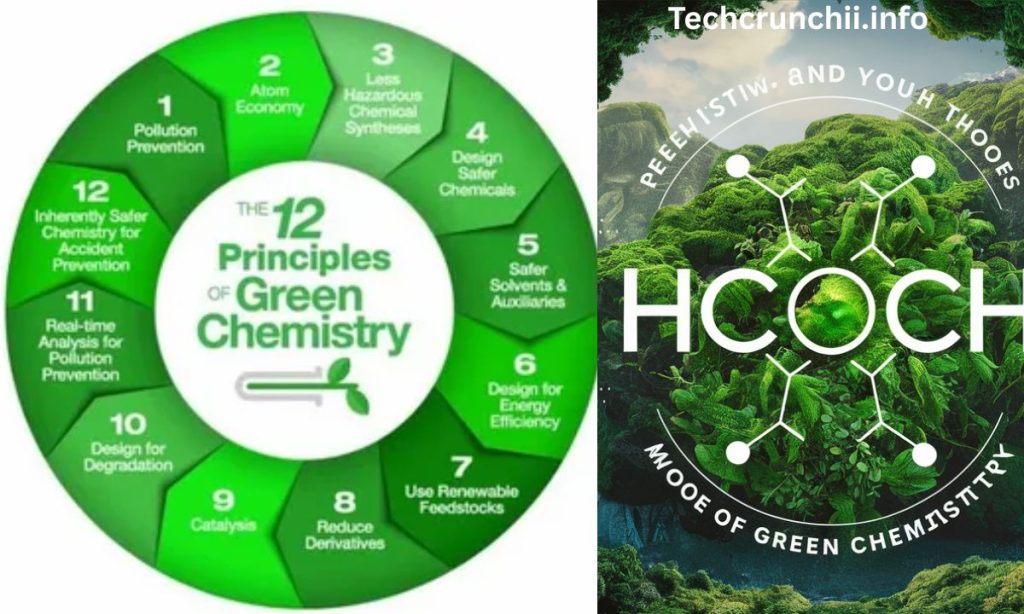
The HCOOCH CH2 H2O system exemplifies multiple green chemistry principles through its inherent design and reactivity patterns. Waste reduction occurs naturally through recyclable reaction cycles where products can regenerate starting materials.
Energy efficiency represents another significant advantage. Reactions proceed under mild conditions, typically at ambient temperatures and atmospheric pressure. This reduces energy consumption compared to traditional high-temperature, high-pressure processes.
Key green chemistry benefits include:
- Non-toxic degradation products
- Water as primary solvent
- Minimal waste generation
- Energy-efficient processes
- Renewable feedstock compatibility
Atom economy in these systems approaches theoretical maximums since most atoms in reactants appear in final products. This efficiency reduces raw material consumption and minimizes waste stream management requirements.
Industrial Applications of HCOOCH CH2 H2O
Industrial applications span diverse sectors, reflecting the system’s versatility and environmental compatibility. Pharmaceutical manufacturing utilizes these reactions for intermediate synthesis, particularly in producing biodegradable drug delivery systems.
Foam production represents a major application area where methyl formate serves as an environmentally friendly blowing agent. This application replaces harmful CFCs and HCFCs, supporting ozone layer protection while maintaining product performance standards.
In polymer chemistry, the reactivity of the methylene group significantly contributes to the formation of flexible polymer backbones. These materials demonstrate improved biodegradability compared to traditional petroleum-based polymers. Catalytic research investigates these systems for hydrogen production and clean fuel development.
Functional Groups and Reactivity
Functional group analysis reveals the molecular basis for observed reactivity patterns. The ester functional group (-COOCH₃) serves as the primary reactive site, undergoing nucleophilic acyl substitution reactions with various nucleophiles.
Methylene reactivity stems from its ability to form carbocation intermediates under appropriate conditions. This reactivity enables C-H activation and chain extension reactions essential for building complex molecular architectures.
Hydrogen bonding between water and other system components influences reaction pathways and selectivity. These interactions stabilize transition states and intermediates, affecting overall reaction kinetics and product distributions.
Safety and Environmental Impact
Safety profiles for HCOOCH CH2 H2O components show favorable characteristics compared to traditional industrial solvents. Methyl formate, while flammable, poses significantly lower health risks than many conventional organic solvents.
Environmental impact assessments demonstrate minimal ecological footprint. Rapid biodegradation prevents environmental accumulation, while low toxicity minimizes adverse effects on aquatic and terrestrial ecosystems. Life cycle analysis supports the sustainability claims for this chemical system.
Occupational exposure risks remain manageable through standard industrial hygiene practices. Proper ventilation and storage procedures effectively control workplace exposures, making this system suitable for large-scale industrial implementation.
Frequently Asked Questions
What is HCOOCH CH2 H2O?
It represents a chemical system combining methyl formate, methylene groups, and water for sustainable chemical processes.
How does methyl formate form?
Methyl formate is typically produced through esterification involving formic acid and methanol under acidic conditions.
Why is this system important for green chemistry?
It offers biodegradable products, uses water as solvent, and operates under mild reaction conditions.
What are the main industrial uses?
Its primary industrial applications include the fabrication of foam materials, pharmaceutical intermediates, and the synthesis of eco-friendly polymers.
Is the system environmentally safe?
Yes, components biodegrade rapidly and show minimal environmental persistence or bioaccumulation.
Conclusion
The HCOOCH CH2 H2O system represents a paradigm shift toward sustainable chemical manufacturing. Its combination of environmental compatibility, industrial versatility, and economic viability positions it as a cornerstone technology for green chemistry applications.
The system’s ability to operate under mild conditions while producing biodegradable products addresses critical environmental concerns.Future developments in this field promise expanded applications across pharmaceutical, materials, and energy sectors.
As regulatory pressures increase and environmental awareness grows, systems like HCOOCH CH2 H2O will become increasingly important for maintaining industrial competitiveness while meeting sustainability goals. The continued research and development of these technologies will drive the next generation of environmentally responsible chemical processes.
Read more info please visit our other site:marrygeneral.com